
ticker
title

Tracey Wilson
February 20, 2026
image
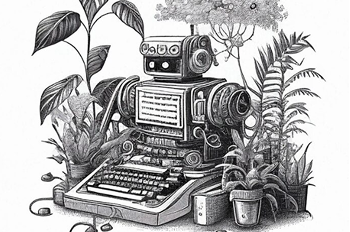
In the whirlwind of AI advancements, 2025 stands as the year agentic AI transitioned from speculative buzz to tangible impact. Unlike generative AI—which excels at creating content from prompts—agentic AI empowers autonomous agents to reason, plan, execute tasks, and adapt in complex environments without constant human oversight. As McKinsey notes in their September 2025 report, “One year of agentic AI: Six lessons from the people doing the work,” deploying these systems requires reimagining workflows, but the rewards in efficiency and innovation are profound.
This shift is driven by large language models (LLMs) integrated with tools, memory systems, and orchestration frameworks. Agents can break down goals into steps, interact with APIs, databases, and even browsers, then iterate based on outcomes. Wikipedia defines agentic AI as “intelligent agents that operate autonomously in complex environments,” prioritizing decision-making over mere output generation.
The year saw explosive growth in agentic applications, particularly in software development. Deloitte’s 2025 AI trends highlight adoption barriers like governance and workforce readiness, but predict full momentum by 2027. Key highlights:
Forbes’ October 2025 piece on “The 8 AI Agent Trends for 2026” (reflecting 2025 momentum) warns of rising cyber risks—e.g., ReaperAI bots exploiting vulnerabilities—but predicts agents as companions, therapists, and productivity boosters.
As an AI-native agentic IDE, Sonic embodies this evolution. Unlike Cursor’s focus on assisted editing or Google’s Antigravity’s agent-first browser control (public preview November 2025, powered by Gemini 3), Sonic automates the full cycle: from vague specs to merge-ready PRs. Multi-agent orchestration handles planning, execution, testing, and iteration autonomously.
In tests, Sonic outperforms in reliability—users report 3x faster feature delivery via coordinated agents, per internal benchmarks. It integrates seamlessly with Git, terminals, and APIs, addressing Gartner warnings: Over 40% of agentic projects may cancel by 2027 due to costs and risks, but Sonic’s governance tools (e.g., explainable decisions, human-in-loop) mitigate this.
image

Hype has led to “agent washing”—rebranding RPA or chatbots as agentic. IBM’s 2025 guide notes expectations vs. reality: Agents excel in narrow, repetitive tasks but struggle with edge cases, infinite loops, or ethical dilemmas like bias and job displacement.
Predictions from Gartner and Deloitte: By 2026, 33% of enterprise apps will embed agentic AI, but success demands API modernization and upskilling. Environmental costs (agents use 100x more compute than LLMs) and privacy concerns (e.g., ByteDance’s Doubao in smartphones) demand robust frameworks.
In tests, Sonic outperforms in reliability—users report 3x faster feature delivery via coordinated agents, per internal benchmarks. It integrates seamlessly with Git, terminals, and APIs, addressing Gartner warnings: Over 40% of agentic projects may cancel by 2027 due to costs and risks, but Sonic’s governance tools (e.g., explainable decisions, human-in-loop) mitigate this.
Agentic AI liberates developers from drudgery, fostering innovation. As Atera’s 2025 predictions forecast a $47B market by 2030, tools like Sonic position teams to ship features—not just code—faster. The hype is real, but grounded in hard-won lessons: Start small, govern wisely, and scale strategically.
Ready to experience agentic workflows? Join Sonic’s Waitlist and automate your development today.
References: McKinsey (Sep 2025), Deloitte AI Trends, Stanford AI Index 2025, Wikipedia Agentic AI, Forbes Oct 2025.
In tests, Sonic outperforms in reliability—users report 3x faster feature delivery via coordinated agents, per internal benchmarks. It integrates seamlessly with Git, terminals, and APIs, addressing Gartner warnings: Over 40% of agentic projects may cancel by 2027 due to costs and risks, but Sonic’s governance tools (e.g., explainable decisions, human-in-loop) mitigate this.
ticker
title
image
Tracey Wilson
February 20, 2026
image
image
image
Tracey Wilson
February 20, 2026
image
Tracey Wilson
February 20, 2026
image
Tracey Wilson
February 20, 2026
One task a day. Real automation skills
input field

Free. No spam. Day 1 starts instantly